White paint turning yellow is a question that comes up often during cabinet estimates in Stafford. A cabinet door that looked bright white a few years ago can slowly drift toward cream, and the change can happen so slowly that it is easy to miss. White cabinets yellowing usually comes down to two things you can control: the coating on the doors and the conditions in your kitchen. Below, we explain what causes it, what prevents it, and what to ask before you hire anyone for cabinet painting services.
Why White Cabinets Turn Yellow in the First Place
Yellowing is a chemical change, not dirt you can wipe away. Sherwin-Williams describes yellowing as a yellow cast that develops in aging paint and is most noticeable on white paints and clear varnishes. White cabinets show it first because there is no pigment to hide it.
Oil-based paint, also called alkyd, hardens by reacting with oxygen in the air. That reaction keeps going long after the paint feels dry, and it pulls the color toward yellow, especially where there is little light. That is why the inside of a pantry door or the panel beside the fridge can look darker than a door near a window.
The paint is not the only cause. Your kitchen itself puts stress on the finish every day. Here is how the most common causes tend to show up.
| Cause | What You May See | Where It Shows Up First |
|---|---|---|
| Oil-based (alkyd) paint | A slow, even cream or yellow cast | Low-light areas, lower cabinets, inside doors |
| Oil-based clear coat over white | An amber tint that deepens with age | Every coated surface |
| Heat from the stove | Yellowing focused in one zone | Doors and panels beside or above the range |
| Cooking grease and smoke | A tacky film with a yellow-brown tint | Upper cabinets near the cooktop |
| Moisture | Discolored edges and seams | Sink base and dishwasher side panels |
| Ammonia cleaners on fresh oil paint | Yellow streaks or blotches | Doors that get cleaned often, near handles |
Why a Fresh Coat of White Isn’t Always the Fix
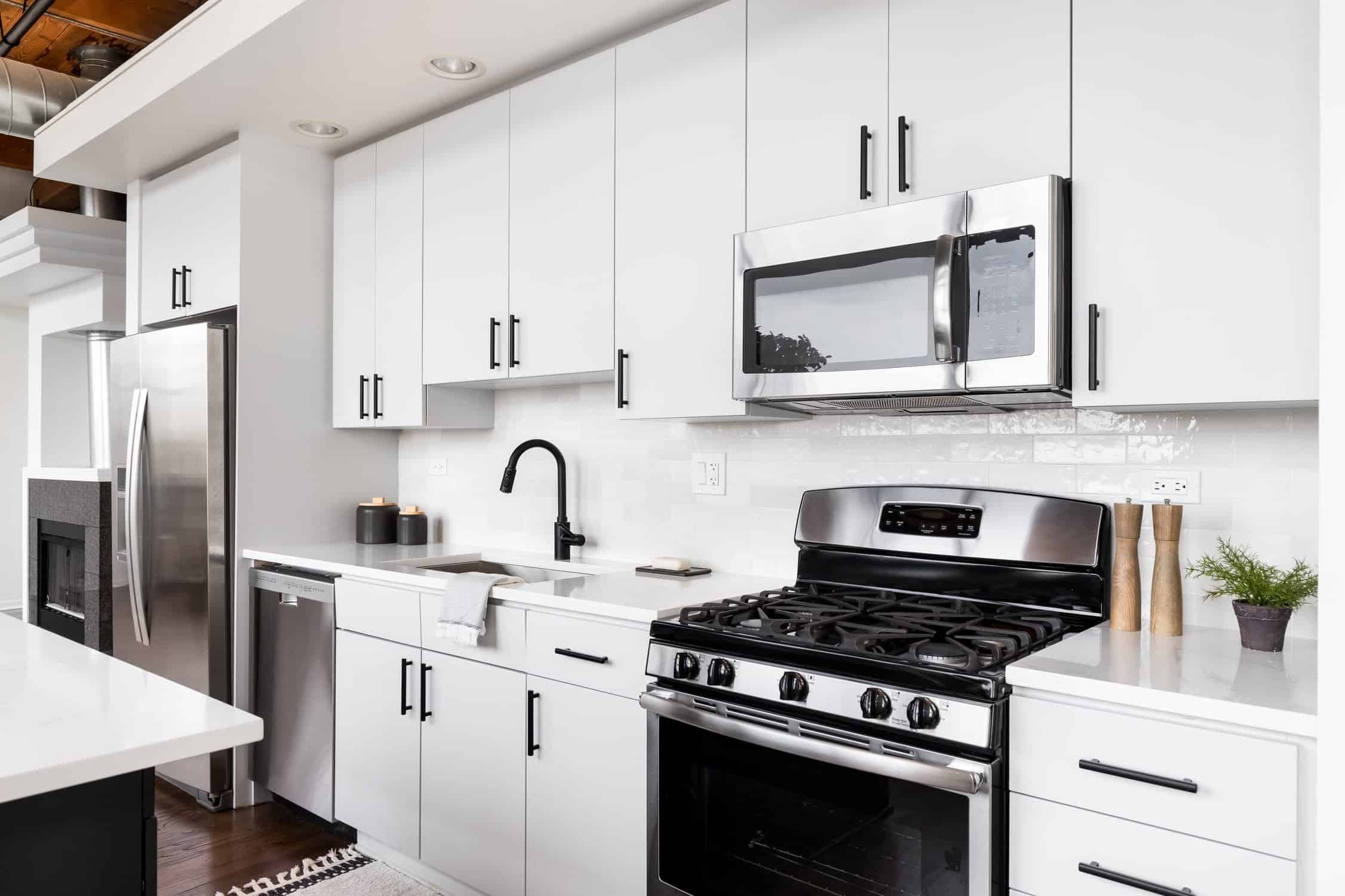
Here is where we disagree with the quick-fix advice. Painting over yellowed cabinets looks great on day one. But Sherwin-Williams notes that if the conditions that caused the yellowing are still there, a new coat will likely yellow too. Switching to latex paint reduces yellowing. It does not cancel out what heat, grease, and smoke do to any finish.
It also helps to know what kind of yellow you are looking at. A sticky film near the stove is often grease, and a good degreaser can remove a lot of it. Yellowing caused by the paint itself is different, because it sits inside the finish and will not wash off. If a cleaned spot is still yellow, the coating has changed color, and only new paint will fix that.
So the first question during an estimate should not be which white to pick. It should be what turned the old finish yellow, and whether that is still happening. These are the points worth checking before anyone recommends a product:
Where the yellowing shows up tells you more than how yellow it looks. Even, overall yellowing points to the coating. Yellowing in one zone points to heat, grease, or moisture, and that needs a plan of its own.
How to Prevent White Cabinets Yellowing Before It Starts
Most of the prevention work happens before the first coat goes on. The product choice and the prep decide how your cabinets look in five years, not just next week. These steps make the biggest difference.
| Prevention Step | Why It Matters |
|---|---|
| Choose a water-based cabinet coating | Alkyd paints yellow as they age; quality latex coatings resist it |
| Prime old oil finishes with a bonding primer | Water-based paint needs a primer to grip a glossy oil surface |
| Skip oil-based clear coats over white | They start amber and darken over time |
| Run the range hood every time you cook | Less heat and grease settle on the doors |
| Clean with mild soap and water | Harsh and ammonia-based cleaners can discolor a finish |
| Wait for a full cure before heavy scrubbing | New coatings keep hardening for weeks after they feel dry |
This is the same thinking behind our cabinet painting services. Every project follows the same order: degrease, sand, prime, paint, then reinstall. Doors and hardware are removed and labeled, and drying time is built in between coats so each layer can harden before the next one goes on.
Oil-Based vs. Water-Based Paint for White Cabinets
Oil-based paint is not a bad product. It levels smoothly and dries hard, which is why some painters still reach for it. For a white kitchen you want to keep white, though, the yellowing trade-off is hard to justify.
| Factor | Oil-Based (Alkyd) | Water-Based |
|---|---|---|
| Yellowing over time | Common, especially in low light | Much less likely |
| Solvent content | Higher | Lower |
| Cleanup | Mineral spirits | Soap and water |
| Fit for white cabinets | Higher yellowing risk | Lower yellowing risk |
There is a second reason we lean toward lower-solvent products indoors. The EPA notes that paints and varnishes contain organic solvents, and its studies found levels of common organic pollutants 2 to 5 times higher inside homes than outside. A kitchen is where your family cooks and eats, so the product choice matters there more than almost anywhere else.
What Medias Painting LLC Does Differently
We have served Virginia homeowners for more than 25 years and completed over 30,000 projects. For cabinets, we use Renner products and low-VOC finishes, and every job is backed by a one-year labor warranty. Most kitchen cabinet projects run $3,500 to $8,000, depending on cabinet count, door style, and finish, and take 5 to 7 days including drying and curing time.
We work with homeowners across Stafford, Fredericksburg, and Spotsylvania. Wherever you live, the plan starts the same way: we find the cause of any yellowing, confirm the old finish type, and explain the coating before work begins. Your price is set during the estimate, and that is the price you pay.