Residential crews and commercial painting contractors can both hold a roller. But they don’t operate under the same rules. The difference between commercial and residential painting often gets reduced to “bigger building, more paint.” So commercial painting contractors get hired the same way home painters do. That’s where property managers run into trouble.
When the wrong crew lands a commercial property job, the property manager carries the fallout: OSHA fines, lien exposure, tenant complaints, and rework on a building that cannot be shut down for repair. This article breaks down what changes when a building scales up, what stays the same, and how to vet a commercial painter before you sign.
Key Takeaways:
Project Scope Changes Everything
Most building owners think the difference between commercial and residential painting comes down to square footage. Bigger building, more paint, longer timeline. But that’s only part of it. A residential job might cover 1,500 to 3,000 square feet of paintable surface. A single-story office complex can run 30,000 square feet and up.
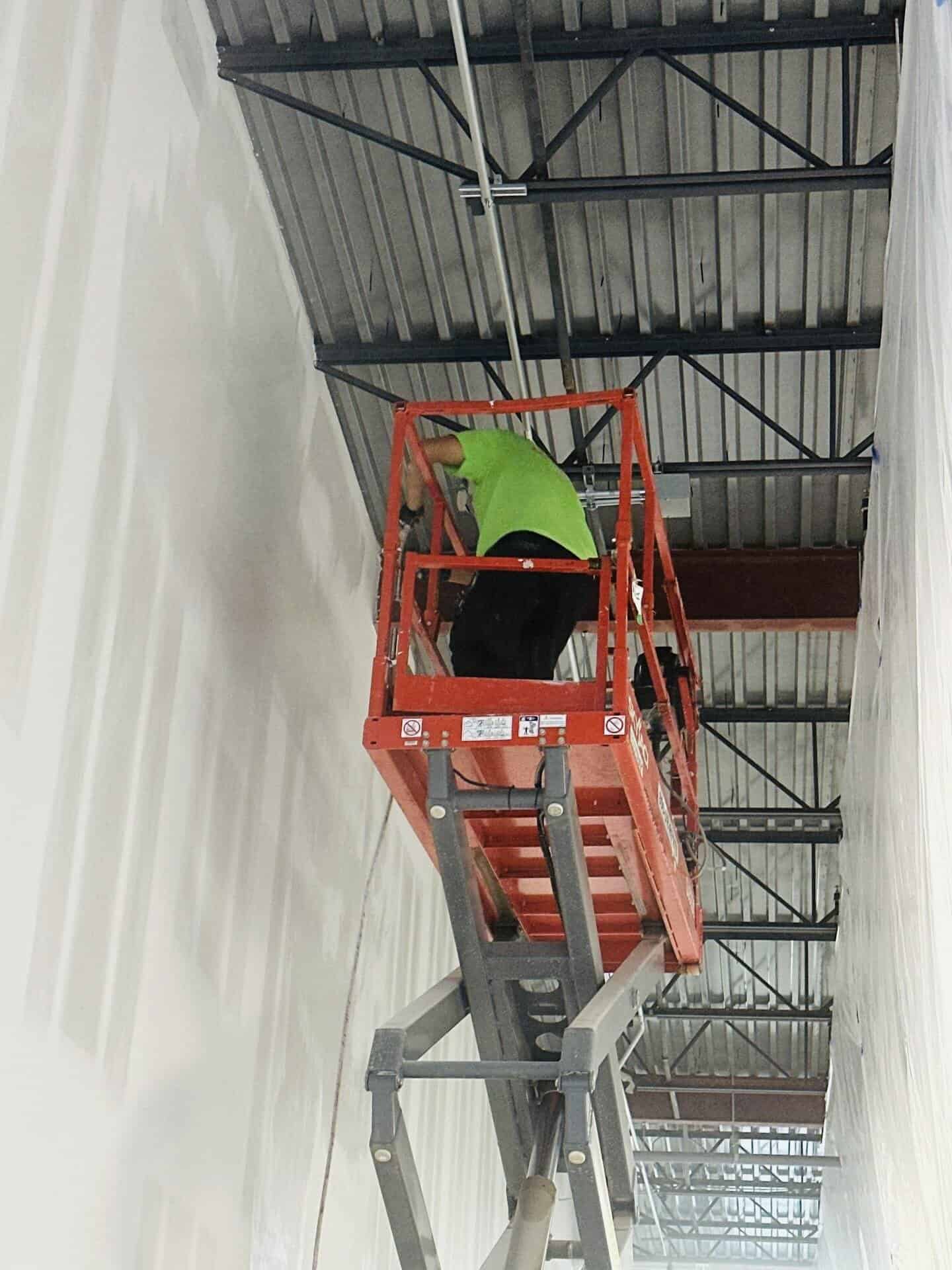
When scope outgrows size, the work changes. Commercial painting contractors plan for crew rotations, multi-day phasing, and lift work. Per the U.S. Bureau of Labor Statistics, commercial painters often work at heights and use scaffolds, lifts, and rigging that home crews rarely set up.
A commercial painting project also touches systems a homeowner never thinks about. HVAC penetrations. Fire suppression piping. Roof curbs. Loading dock bumpers. Line striping. Signage clearances. The bid document for a commercial property includes finish schedules, mockup approvals, and submittal sheets. None of that looks like a residential proposal. If a contractor’s quote fits on a single page, they’re not built for your project.
Surface Prep, Coatings, and Code Compliance
Residential paint is mostly about looks. Commercial paint is about looks plus performance. The spec sheet on a commercial property has to match the coating to the abuse the surface takes.
Tenant turnover. Forklift impact. Hand traffic. UV on a south-facing facade. Chemical splash in a maintenance bay. When all that is in play, you need epoxies, urethanes, elastomerics, and direct-to-metal primers, not the latex you’d put on a living room wall.
Code rules are where most residential crews fall short on a commercial property. For commercial repaints, OSHA’s Lead in Construction standard (29 CFR 1926.62) governs any work that may disturb lead-based coatings, which still show up on industrial steel, parking decks, exterior trim, and pre-1978 commercial structures. The EPA’s Renovation, Repair, and Painting (RRP) Rule covers a narrower scope: pre-1978 target housing and child-occupied facilities like daycares and pre-1978 portions of K-6 schools. A mixed-use property with apartments above retail can trigger both. OSHA’s fall protection rule kicks in at six feet for construction work, which covers most exterior commercial painting on lifts or scaffolds.
Hazard Communication training, Safety Data Sheets, and respirator fit-testing are required on most commercial painting projects. None of this is optional. Hiring a contractor who cannot produce these credentials puts the property manager on the hook when an inspector or insurance adjuster shows up.
Scheduling Around an Operating Business
Homeowners can move out of a bedroom for a day. A 200-tenant office tower cannot. This is where the work hits property managers hardest. A commercial painting project gets built around your operations, not the other way around. That can mean night shifts, weekend rotations, holiday work, or phased zones. The goal is to keep occupied floors usable while painting moves through the building.
When commercial painting contractors do this work daily, they plan for fume control, off-hour security access, dust containment, and vendor sync-ups. They know how to set up containment so the tenant on Floor 3 doesn’t smell paint while the crew on Floor 7 keeps rolling. A residential crew showing up at 8 a.m. with open paint cans and no tenant notice can shut down a building for the day. That’s not a paint problem. That’s a tenant retention problem.
Pricing Looks Different, and So Does the Contract
A residential painter quotes by the room or by the home. Commercial pricing is built differently. Published per-square-foot benchmarks from consumer sources like Angi put small commercial exterior work at $2 to $6 per square foot, with reported job averages near $12,000 and a typical range of $5,500 to $18,500. Those benchmarks describe storefronts and small standalone buildings.
Once a project clears 10,000 square feet, the math changes. A 30,000 square foot office complex priced at the same $2 to $6 per square foot lands between $60,000 and $180,000, before mobilization, containment, lift rentals, after-hours premiums, or performance coatings enter the spec. The per-square-foot number is a reference point, not the contract.
When commercial painting contractors bid against detailed scopes, they submit through procurement. They work under contracts with retainage, change orders, and lien waivers built in. Residential jobs often run 50% deposit, 50% on completion. A commercial property paint contract on a multi-phase job may invoice monthly, hold retention, and require certificates of insurance naming the owner and manager. If a contractor pushes back on standard commercial contract language, that’s your signal.
How to Vet a Commercial Painting Company
Before you hire, ask for documents, not promises. A real commercial painting company can produce the following inside 24 hours:
A contractor who hedges, asks why, or sends a generic insurance certificate is selling a residential operation in commercial clothing. The gap between the two is rarely visible until something goes wrong. The vetting documents are how you see it before signing.
What Stays the Same
Both jobs need clean prep, the right primer, two coats where one won’t hold, and a crew that masks before they roll. Both need a foreman who shows up on time and a paint that matches the spec. Both need a finish that still looks right two years from now.
The difference between commercial and residential painting isn’t about who cares more. It’s about whether the contractor can do the work without disrupting your tenants or blowing your budget. The contractors who can do both are the ones worth shortlisting.
Ready to Vet the Right Contractor?
If you manage a commercial property and you’re weighing whether your residential painter can stretch into a bigger job, Medias Painting LLC can walk you through what changes when the building scales up.
Our commercial painting contractors carry the paperwork, training, and insurance property managers expect. We bid against your scope. We schedule around your tenants. We close out projects with the records your asset team needs. Pricing is clear and built around your actual building, not a square-foot guess.
Call 540-210-1363 for a walkthrough and bid. We’ll tell you straight if your project fits a residential crew or if it belongs with a commercial painting company. The right contractor protects your tenants, your timeline, and your bottom line.