When it comes to painting your home or commercial property, prep work determines whether your finish lasts for years or starts peeling within months. One of the most common and costly mistakes property owners make is skipping power washing before painting.
Power washing isn’t just about making the surface look clean. It removes contaminants, chalk, mildew, and loose paint that would otherwise prevent proper adhesion. Without it, even the best paint systems like Sherwin-Williams Emerald Exterior Acrylic Latex or Benjamin Moore Aura® Exterior can fail prematurely, no matter how many coats of paint you apply.
At Medias Painting LLC, our interior house painting and exterior prep projects in King George, VA always begin with a thorough surface wash. Because we’ve seen it too many times: applying multiple coats of paint on a dirty, unwashed wall only traps problems underneath and shortens your paint’s lifespan drastically
Key Takeaways
The Science Behind Surface Preparation and Paint Adhesion
Before diving into the costly problems, it’s important to understand why paint doesn’t just “stick” to anything. Paint forms both mechanical and chemical bonds with the substrate. Dirt, oil, mildew, and chalking prevent those bonds from forming properly, no matter how many coats of paint you roll or spray.
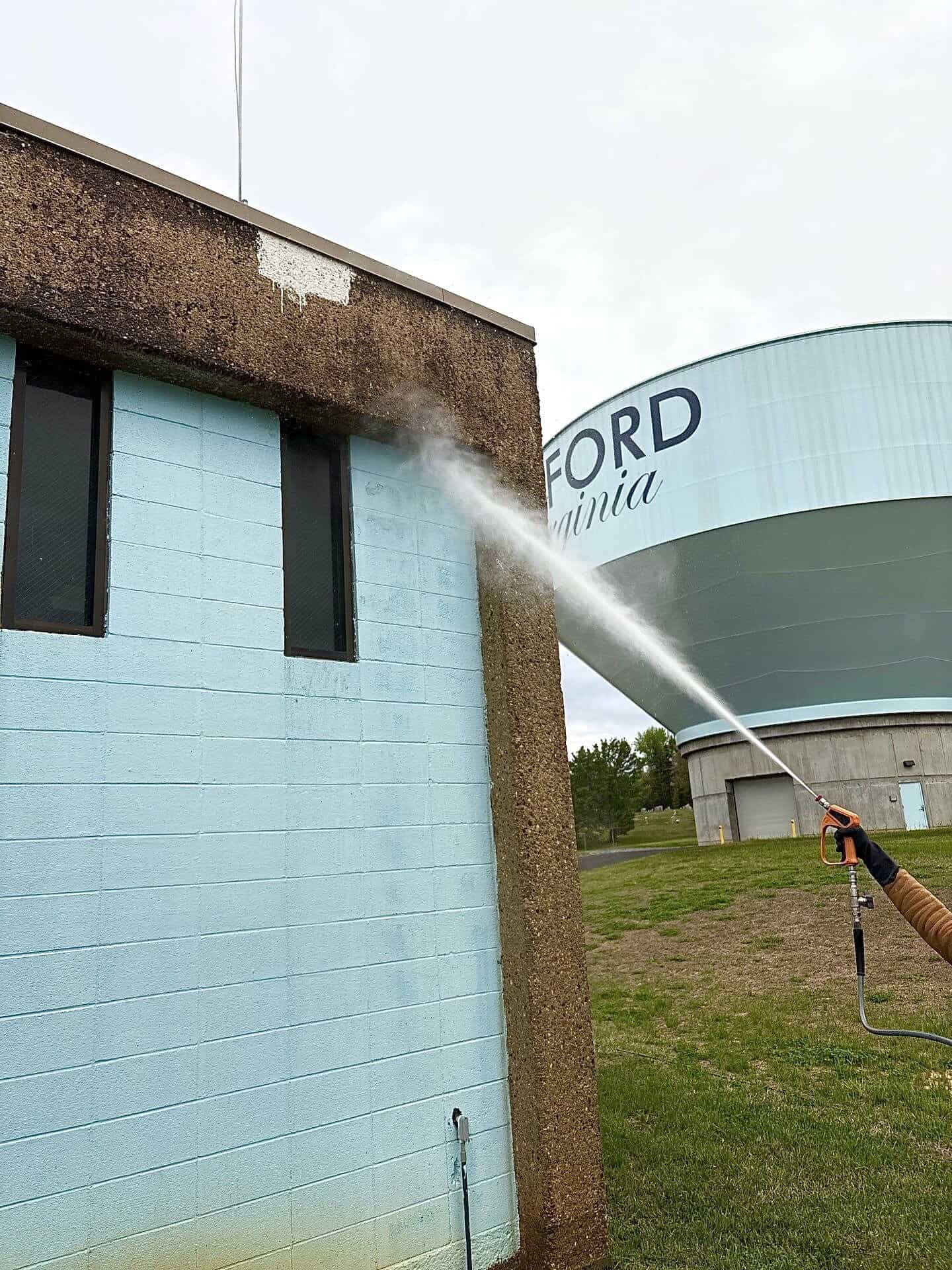
Professional painters use power washing systems with carefully controlled PSI levels and surface-specific detergents:
| Surface Type | Recommended PSI Range | Detergent/Agent |
|---|---|---|
| Vinyl or Wood Siding | 1,200–2,000 PSI | Mild detergent solution |
| Stucco or Brick | 2,500–3,500 PSI | Masonry-safe cleaner |
| Metal Surfaces | 1,500–2,000 PSI | Degreaser followed by a clean rinse |
Skipping this cleaning process almost guarantees coating failure. Even when using high-end primers or elastomeric coatings, poor prep prevents proper film build. No number of coats of paint can fix a contaminated surface underneath.
The 7 Costly Problems You Might Face If You Skip Power Washing
1. Premature Paint Peeling and Flaking
When surfaces aren’t properly cleaned, paint doesn’t anchor well. Dust, pollen, and mildew act as invisible barriers. Within months, you’ll see peeling, cracking, or blistering, especially in humid regions like King George, VA.
Fact: According to ASTM D3359 paint adhesion standards, unwashed surfaces can reduce adhesion strength by up to 70%.
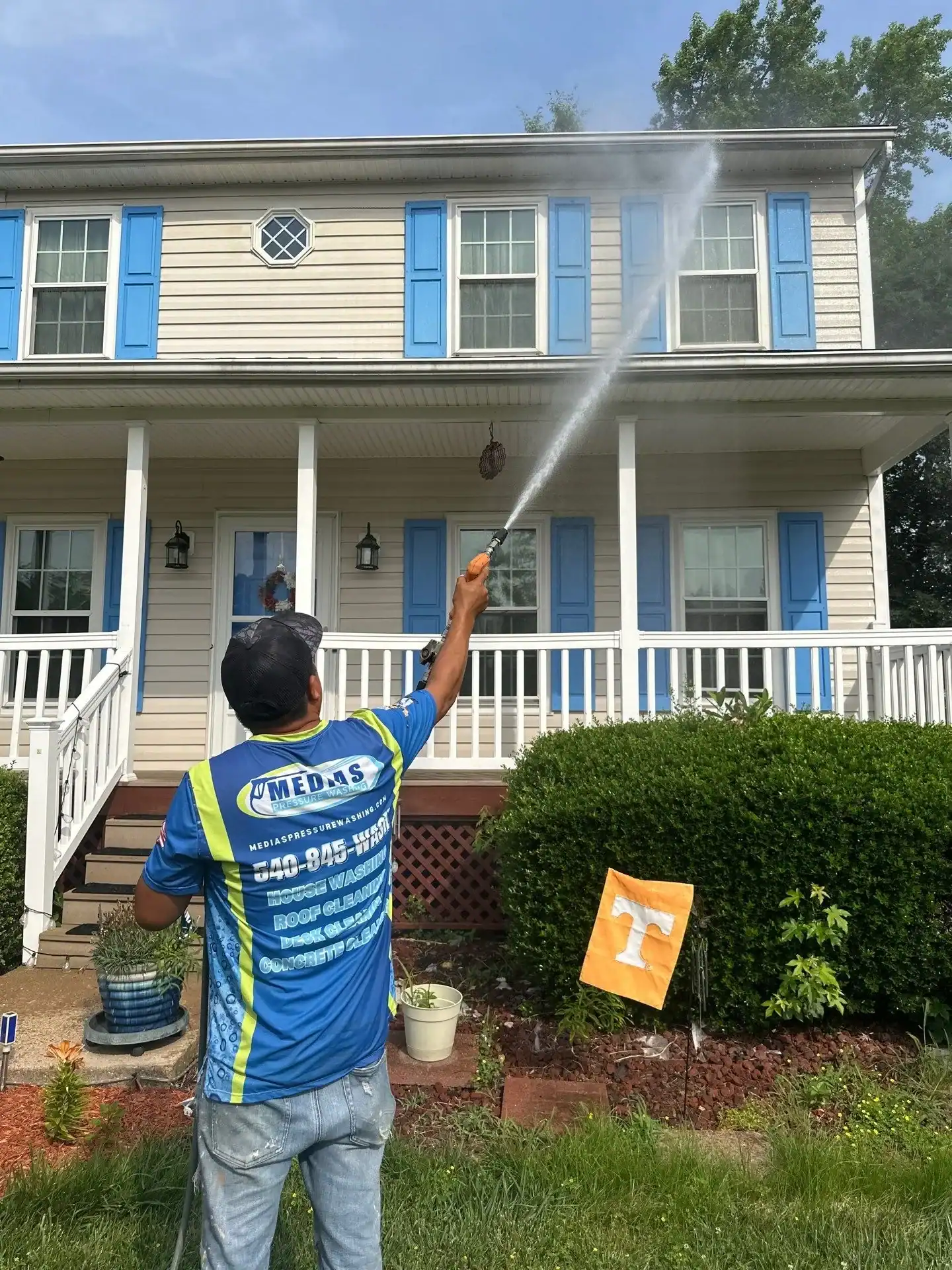
Service Tip: Professional painters always power wash before applying primer or any finish coat. At Medias Painting LLC, we use low-pressure rinsing and eco-friendly detergents to remove contaminants without damaging delicate substrates.
2. Trapped Mold, Mildew, and Algae
If you paint over mildew or algae, you’re not solving the problem, you’re sealing it in. These organisms feed on trapped moisture beneath your coats of paint, leading to bubbling and discoloration later.
Product Note: Mold-resistant paints like Zinsser Perma-White® or BEHR Premium Plus® Mildew Resistant Finish work best only when applied over clean, disinfected surfaces.
Service Insight: Medias Painting LLC applies fungicidal wash before repainting exterior walls or interior damp areas, especially in shaded or moisture-prone zones.
3. Uneven Paint Coverage and Streaking
When chalk and dirt remain, paint can’t absorb evenly. The result? A blotchy finish that looks dull and inconsistent even after multiple coats of paint.
Fact: Chalking is the oxidation of old paint film. Power washing neutralizes and removes that residue before recoating.
Pro Tip: For chalky surfaces, painters use trisodium phosphate (TSP) or similar detergent blends to neutralize oxidation. Without this step, no number of coats of paint will produce a uniform sheen.
4. Shortened Paint Lifespan
Even the highest-quality paint system won’t last long if applied to a dirty substrate. Skipping power washing can shorten your coating’s lifespan by 30–50%.
| Scenario | Average Lifespan | Maintenance Need |
| Properly prepped with wash + 2 coats | 8–10 years | Low |
| Unwashed surface + 2 coats | 3–5 years | High |
The difference? Thousands of dollars saved in early repainting. Remember: applying two or three coats of paint over grime doesn’t extend lifespan; it only hides issues temporarily.
5. Paint Bubbling and Blistering
Residual moisture or oil beneath the surface causes paint bubbles and blisters. Once these pop, your coats of paint separate from the substrate, exposing bare areas.
Medias Painting LLC uses moisture meters to verify surface dryness before applying any primer or finish. Skipping this step leads to early coating failure.
6. Hidden Surface Damage Remains Unseen
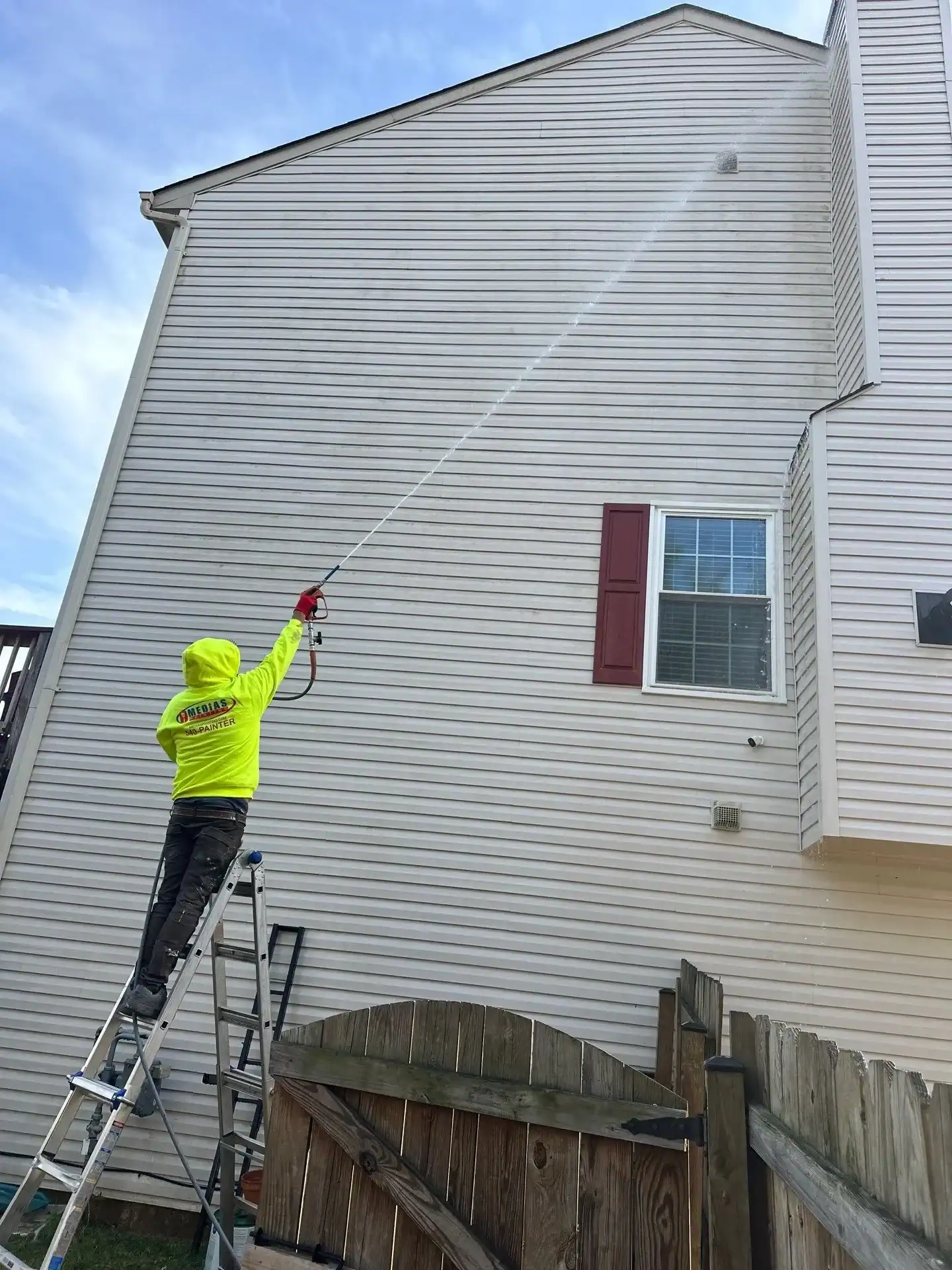
Power washing does more than clean; it reveals hidden damage. Rot, cracked caulk, and loose siding often stay unnoticed until after your coats of paint fail.
Medias Painting LLC inspects trim joints, sealants, and siding right after washing. This ensures your surface is sound before applying any coats of paint.
7. Wasted Labor, Materials, and Money
Skipping power washing might look like a cost-saving shortcut, but it’s the fastest way to double expenses.
Why Professionals Never Skip Power Washing
Experienced painters treat cleaning as part of the coating system, not an optional step. At Medias Painting LLC, we consider it the first “coat” in the entire process. Our prep process includes:
Each step ensures that every subsequent coat of paint bonds properly, cures evenly, and performs as the manufacturer intended.
And when combined with professional hand scraping, the surface becomes even smoother, removing stubborn flakes and ensuring every new layer has the ideal foundation.
How Long Should You Wait to Paint After Power Washing?
Applying paint too soon after washing is one of the most common mistakes. Surfaces must be completely dry to ensure adhesion between coats of paint.
| Surface Type | Drying Time |
| Wood | 48–72 hours |
| Stucco / Brick | 24–48 hours |
| Vinyl / Metal | 12–24 hours |
Pros use electronic moisture meters to check dryness before applying primer or finish coats. This ensures that the next coats of paint cure fully and last longer.
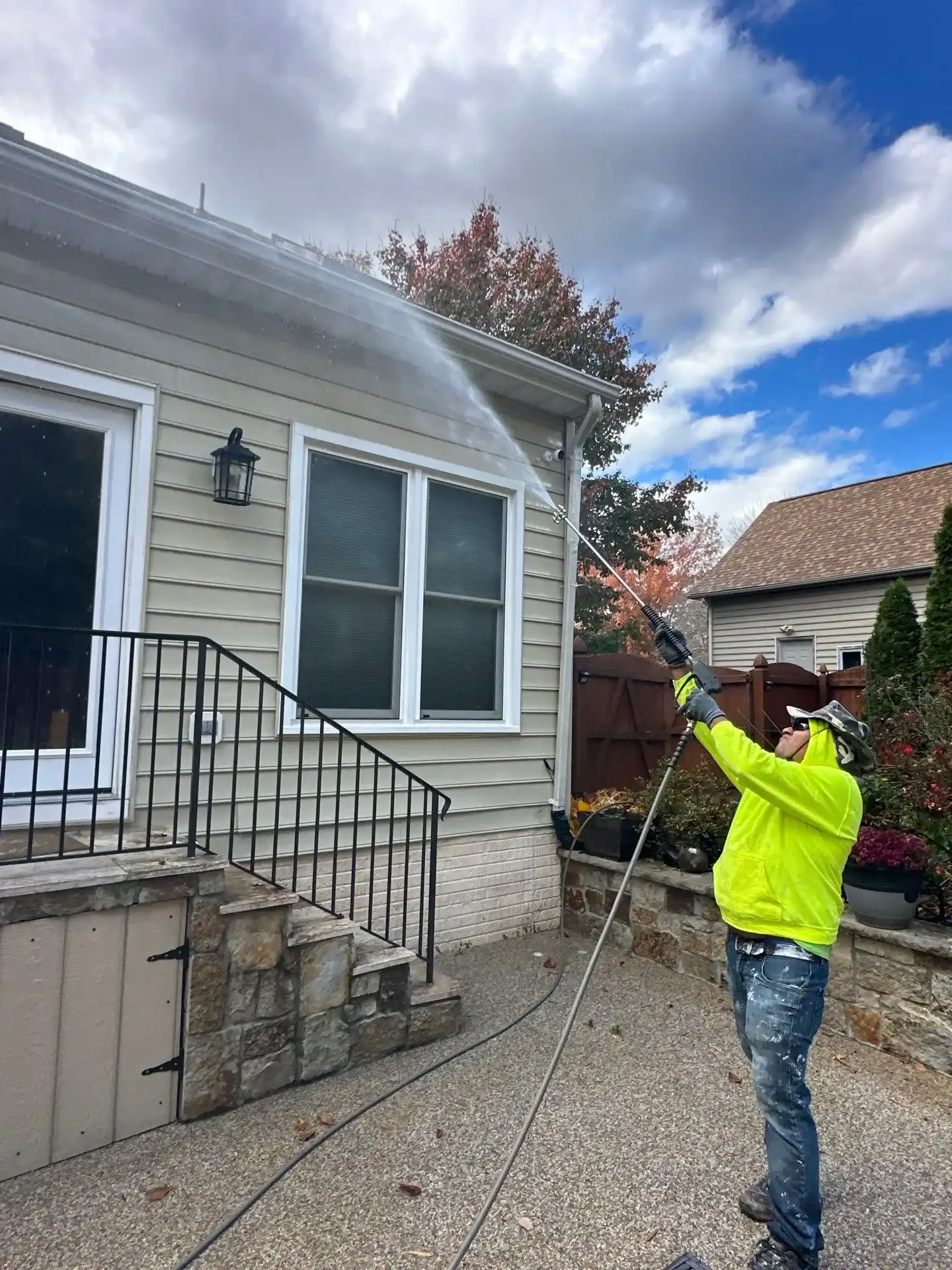
Power Washing and Painting FAQS
Q1: Can I just rinse with a hose instead of power washing?
No. Garden hoses can’t remove oxidation, mildew, or deep-set dirt. Only power washing provides the force and detergents needed to prep for durable coats of paint.
Q2: Will power washing damage my siding or wood?
Not when done professionally. Incorrect pressure or nozzle use can harm surfaces, but pros adjust PSI levels precisely.
Q3: Can I paint right after washing?
No. Moisture trapped beneath coats of paint leads to peeling and bubbling. Always let surfaces dry completely.
Q4: Does every surface need power washing?
Yes, though intensity varies. Concrete may need high PSI; aluminum siding requires gentler settings.
Q5: Is detergent necessary?
For exterior repainting, absolutely. Detergents break down grease, soot, and biological contaminants that water alone can’t remove.
Final Thoughts
Power washing is the unsung hero of every long-lasting paint job. It’s not optional, it’s essential. It’s the foundation that allows your coats of paint to perform to their full potential.
Whether you’re repainting an office complex, updating a multi-unit building, or refreshing your home in King George, VA, never skip the wash.
At Medias Painting LLC, every painting project, inside and out, begins with meticulous surface preparation to ensure your coats of paint look flawless and endure for years.