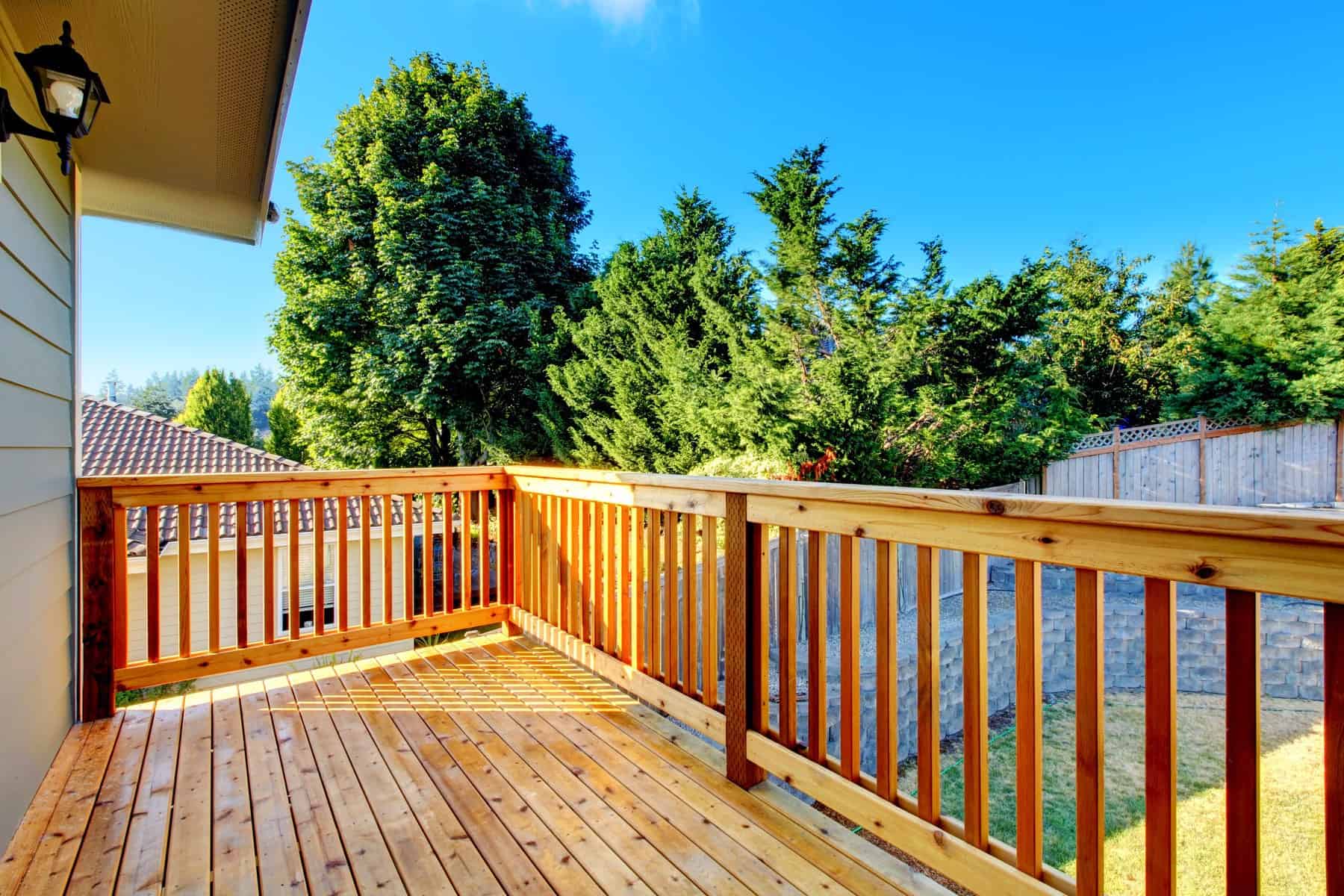
If you notice peeling deck stain in Fredericksburg, VA on a surface that was done just one to four years ago, something is off, and you are right to pay attention. That early wear is one of the most telling deck stain failing signs homeowners can spot from a few feet away, and addressing it now is the difference between a straightforward re-stain and a costly board replacement. At Medias Painting LLC, our deck and fence painting team sees this pattern regularly throughout the greater Fredericksburg area, and in most cases the wood can still be saved when the signs are caught in time.
Why Deck Stain Fails in the First Place
A deck stain is not just color. It is a protective barrier between your wood and everything the outdoors throws at it: rain, UV rays, temperature swings, mold spores, and daily foot traffic. When the stain is working, it penetrates the wood fibers and forms a bond that repels moisture. When that bond breaks down, the wood is fully exposed.
The deck stain failing signs discussed below all trace back to one of two root causes: the stain lost its protective ability due to weathering, or it never bonded to the wood properly in the first place. In Virginia, both situations happen faster than homeowners in drier states would expect, because the climate here is genuinely hard on exterior wood finishes.
According to WoodRich Brand’s research on how weather affects deck stain performance, moisture is one of the biggest enemies of deck stain, and rain or high humidity can prevent stain from bonding to the wood or wash it away before it fully cures. That dynamic plays out across every spring and summer here.
7 Deck Stain Failing Signs You Can Check Right Now
Not every sign of wear looks the same. Some show up clearly from across the yard. Others require you to crouch down and press a screwdriver into the wood. Here is a breakdown of what to look for, what it means, and how serious it is.
| Sign | What It Looks Like | What It Means |
|---|---|---|
| Peeling or flaking stain | Stain lifting off in sheets or chips | Loss of adhesion from moisture, over-application, or stain layered over a failing coat |
| Graying or bleached wood | Boards turning silver-gray or ashen | UV exposure has depleted the stain’s pigments and broken down the wood fiber |
| Failed water-beading | Water soaks in instead of rolling off | Waterproofing barrier is gone |
| Black or green mold patches | Dark staining or fuzzy growth on boards | Moisture is trapped, and fungal growth has started |
| Cracking or splitting boards | Lengthwise cracks appearing in board surfaces | Wood is cycling between wet and dry without protection |
| Uneven or blotchy fading | Color is patchy across different boards | UV damage hits thinner areas of coverage first |
| Soft spots or spongy boards | Wood gives when you press a screwdriver into it | Active rot is present, and structural damage may have started |
Any one of these alone is worth a closer look. If you are seeing two or more at the same time, the stain has clearly failed, and the wood needs attention before the next rainy season.
Why Virginia’s Climate Makes All of This Worse
Homeowners in drier states might get three to five years out of a semi-transparent stain before seeing signs of deck stain failure. In the greater Stafford, VA area and surrounding counties, that timeline is often compressed. Here is why:
A new pressure-treated wood deck can deteriorate visibly within 2 years and structurally within 5 to 8 years without proper staining and sealing. The combination of UV, humidity, and freeze-thaw cycles in this region means the window between “looks a little off” and “needs board replacement” is shorter than most homeowners expect.
Knowing when deck stain failing signs cross from minor to serious can help you act before that window closes.
What Happens When You Wait
Ignoring deck stain failing signs long enough has a predictable progression. Here is how it typically unfolds:
- 1
Stain fails and water begins penetrating the wood fiber.
- 2
Mold and mildew establish on the surface and inside the grain.
- 3
Wood begins cracking and splitting from repeated moisture cycling.
- 4
Rot sets in, starting in areas where water pools near fasteners or board ends.
- 5
Structural integrity is compromised, making boards unsafe to walk on.
Each step in that progression costs more to fix than the last. A re-stain on a deck caught at the surface stage costs a fraction of replacing boards and repairing framing. The earlier the call, the more wood you can save and the less the whole project costs.
What a Professional Deck Inspection and Re-Stain Actually Involves
When our team at Medias Painting LLC evaluates a deck with signs of a failing stain, we look beyond the top surface. Here is what the process covers:
- 1Inspect the entire surface of each board for soft spots, cracks, and other structural issues before any work begins.
- 2Pressure washing removes mold, mildew, pollen, and loose or peeling stains (learn more about why pressure washing before painting or staining is a step you should never skip).
- 3Surface preparation, including sanding where needed to open the wood grain and give the new stain a clean surface to absorb into.
- 4Product selection matched the wood type, sun exposure, and the deck surface’s current condition.
- 5Application of high-quality penetrating stains, both oil- and water-based depending on the project, for long-term protection that holds up to Virginia’s conditions
Our team has worked in the Fredericksburg area for over 25 years. We back every project with a one-year labor warranty and a no-surprise guarantee, meaning the price we quote is the price you pay. There are no additions at the end of the job.
When to Call Versus When to Keep Watching
Not every deck needs emergency work. This table gives a quick read on urgency based on what you are seeing:
| What You See | Urgency Level | Recommended Action |
|---|---|---|
| Slight fading, water still beading | Low | Monitor; plan for re-stain next season |
| Water soaking in, no mold or cracks yet | Moderate | Schedule an assessment before the next rain season |
| Peeling or flaking stain visible | Moderate-High | Strip and re-stain before more moisture gets in |
| Mold patches and cracking boards | High | Call soon; prep and re-stain needed now |
| Soft spots or spongy wood anywhere | Urgent | Call immediately; structural damage may be present |
If you are in the moderate, high, or urgent category, do not wait for the weather to dry out before getting a quote. Damage moves faster with every rain event once the stain has failed.